
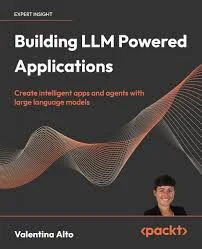

LLM‑Driven Full‑Stack Applications: Architecture, Design Patterns, and the Role of IAS‑Research.com
Abstract
Large Language Models (LLMs) are transforming how modern software systems are conceived, built, and scaled. Beyond chatbots, LLMs are now core components of full‑stack applications that combine intelligent reasoning, natural language interaction, retrieval‑augmented generation (RAG), orchestration logic, and traditional web and mobile architectures. This research white paper presents a comprehensive, practitioner‑oriented analysis of LLM‑driven full‑stack applications. It covers architectural patterns, backend and frontend integration, data and MLOps considerations, security and governance, and real‑world enterprise and SME use cases. The paper further explains how IAS‑Research.com enables organizations to design, build, deploy, and govern production‑grade LLM systems, bridging advanced AI research with practical digital transformation.
1. Introduction
Full‑stack development has historically focused on the integration of frontend user interfaces, backend business logic, databases, and infrastructure. The rise of LLMs introduces a new intelligent layer that fundamentally changes how users interact with systems and how software delivers value. Instead of rigid workflows, LLM‑driven applications enable conversational interfaces, semantic search, automated reasoning, and adaptive decision‑making.
For SMEs and enterprises alike, the challenge is no longer access to models, but integration: how to embed LLMs into reliable, secure, and scalable full‑stack systems. This requires multidisciplinary expertise across software engineering, data engineering, AI/ML, UX, and organizational change. IAS‑Research.com operates at this intersection, helping organizations move from experimentation to production‑grade LLM solutions.
2. Evolution of Full‑Stack Applications with LLMs
2.1 From CRUD to Cognitive Systems
Traditional full‑stack applications are CRUD‑centric (Create, Read, Update, Delete). LLM‑enabled systems extend this model by introducing:
- Natural language as a primary interface
- Semantic understanding instead of keyword matching
- Reasoning over unstructured and semi‑structured data
- Autonomous or semi‑autonomous task execution
2.2 Drivers of Adoption
Key drivers behind LLM adoption in full‑stack systems include:
- Advances in transformer architectures
- Availability of APIs and open‑source models
- Improved developer tooling (LangChain, LlamaIndex, OpenAI SDKs)
- Business demand for productivity, personalization, and automation
3. Reference Architecture for LLM‑Driven Full‑Stack Applications
3.1 High‑Level Architecture
A typical LLM‑driven full‑stack system consists of:
- Frontend: Web or mobile UI (React, Next.js, Flutter)
- Backend API Layer: REST/GraphQL services (Node.js, Spring Boot, FastAPI)
- LLM Orchestration Layer: Prompt management, chaining, tool use
- Retrieval Layer: Vector databases and search (FAISS, Pinecone, Weaviate)
- Data Layer: Relational, NoSQL, and document stores
- MLOps & DevOps: CI/CD, monitoring, evaluation, cost control
3.2 Retrieval‑Augmented Generation (RAG)
RAG has become the dominant pattern for enterprise LLM systems. It combines:
- Document ingestion and embedding
- Vector similarity search
- Context injection into LLM prompts
This approach reduces hallucinations, improves factual accuracy, and enables domain‑specific intelligence.
3.3 Agent‑Based Architectures
Beyond single prompts, agent architectures enable:
- Multi‑step reasoning
- Tool invocation (APIs, databases, code execution)
- Workflow automation
IAS‑Research.com designs agentic systems aligned with business processes rather than experimental demos.
4. Backend Engineering for LLM Systems
4.1 API Design
Backend APIs must support:
- Stateless and stateful LLM interactions
- Session memory and conversation context
- Rate limiting and cost controls
4.2 Prompt Engineering as Code
Prompts should be treated as versioned artifacts:
- Stored in repositories
- Tested against evaluation datasets
- Continuously refined using feedback loops
4.3 Integration with Enterprise Systems
LLM backends frequently integrate with:
- ERP and CRM platforms
- Content management systems
- Data warehouses and analytics platforms
IAS‑Research.com specializes in secure system integration for regulated and industrial environments.
5. Frontend Design for AI‑Native Applications
5.1 Conversational UX
LLM‑driven frontends emphasize:
- Chat‑based and multimodal interfaces
- Progressive disclosure of information
- Human‑in‑the‑loop interactions
5.2 Trust and Transparency
Effective UI design must communicate:
- Confidence levels and sources
- Limitations of AI outputs
- Opportunities for user correction
6. Data Engineering and Knowledge Pipelines
6.1 Data Ingestion and Curation
High‑quality LLM systems depend on:
- Clean, curated documents
- Metadata and tagging strategies
- Versioned knowledge bases
6.2 Embeddings and Vector Stores
Design considerations include:
- Chunking strategies
- Embedding model selection
- Index refresh and re‑embedding
IAS‑Research.com provides end‑to‑end data pipeline design optimized for RAG systems.
7. MLOps, DevOps, and Observability
7.1 Continuous Deployment
LLM systems require:
- Canary deployments for prompt changes
- Model version tracking
- Automated rollback strategies
7.2 Monitoring and Evaluation
Key metrics include:
- Response quality and relevance
- Latency and cost per query
- User satisfaction signals
8. Security, Privacy, and Governance
8.1 Security Challenges
Risks include:
- Prompt injection attacks
- Data leakage
- Unauthorized tool invocation
8.2 Governance Frameworks
Organizations must define:
- Acceptable use policies
- Model audit trails
- Human oversight mechanisms
IAS‑Research.com aligns LLM governance with enterprise risk management and compliance standards.
9. Use Cases of LLM‑Driven Full‑Stack Applications
9.1 Enterprise Knowledge Assistants
- Internal policy and documentation search
- Engineering and R&D support tools
9.2 Intelligent Customer Support
- Context‑aware chatbots
- Automated ticket triage
9.3 Research and Analytics Platforms
- Natural language querying of datasets
- Automated literature reviews
9.4 SME Digital Transformation
- AI‑enhanced websites and ecommerce
- Marketing automation and content generation
10. The Role of IAS‑Research.com
IAS‑Research.com acts as a strategic partner across the LLM application lifecycle:
10.1 Research‑Driven Architecture Design
- Translating AI research into production architectures
- Selecting appropriate models and frameworks
10.2 Full‑Stack Implementation
- Backend and frontend development
- Secure API and data integration
10.3 RAG and Agent Systems
- Custom knowledge pipelines
- Business‑aligned agent workflows
10.4 Governance and Scaling
- MLOps and monitoring
- Security, privacy, and compliance
Through its engineering‑first approach, IAS‑Research.com helps organizations avoid common pitfalls such as pilot paralysis, hallucination risks, and unscalable prototypes.
11. Implementation Roadmap
- Discovery and Use‑Case Definition
- Architecture and Data Readiness Assessment
- Prototype and Validation (RAG MVP)
- Production Deployment
- Monitoring, Optimization, and Scale‑Up
IAS‑Research.com supports each phase with technical leadership and applied research expertise.
12. Future Directions
Emerging trends include:
- Multimodal LLM applications
- On‑device and edge inference
- Hybrid symbolic‑neural systems
Organizations that invest early in robust full‑stack LLM foundations will gain durable competitive advantage.
13. Conclusion
LLM‑driven full‑stack applications represent a paradigm shift in software engineering. Success requires more than model access; it demands disciplined architecture, data governance, and organizational alignment. IAS‑Research.com provides the research‑backed, engineering‑led capabilities required to turn LLM potential into scalable business impact.
References
- Vaswani et al., Attention Is All You Need, NeurIPS.
- Lewis et al., Retrieval‑Augmented Generation, Facebook AI Research.
- Manning, AI Agent in Action.
- Perri, Escaping the Build Trap.
- Torres, Continuous Discovery Habits.
- Olsen, The Lean Product Playbook.
- OpenAI, GPT‑4 Technical Report.
- Hugging Face, Transformers Documentation.
- NIST, AI Risk Management Framework.
- McKinsey, The Economic Potential of Generative AI.