
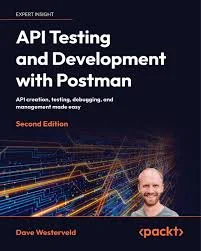

Research White Paper
Postman for Microservices, Distributed Systems, and Modern Software Engineering
Part 1 – Foundations of API-First Software Engineering and Digital Transformation
Author: OpenAI Research Collaboration
Prepared for: Enterprise Architects, Software Engineers, DevOps Teams, SME Technology Leaders, Researchers, and Graduate Students
Executive Summary
Modern enterprises are rapidly transforming their software ecosystems from large monolithic applications into cloud-native, distributed platforms composed of hundreds or even thousands of microservices. These services communicate through Application Programming Interfaces (APIs), making APIs the fundamental building blocks of digital transformation.
In today's software industry, APIs are no longer considered simple communication interfaces. They represent business capabilities that connect cloud platforms, mobile applications, artificial intelligence systems, Internet of Things (IoT) devices, enterprise resource planning (ERP) systems, customer relationship management (CRM) platforms, payment gateways, and external business partners.
As organizations adopt Agile methodologies, DevOps practices, Kubernetes orchestration, cloud computing, and event-driven architectures, ensuring API quality becomes a mission-critical engineering activity. Poorly designed APIs lead to security vulnerabilities, scalability issues, integration failures, inconsistent business logic, and increased maintenance costs.
Among the many API engineering tools available today, Postman has emerged as one of the industry's most comprehensive API lifecycle platforms. Originally developed as an API testing tool, Postman has evolved into a collaborative environment supporting API design, documentation, automated testing, mocking, monitoring, governance, and continuous integration.
The uploaded reference, API Testing and Development with Postman, emphasizes that APIs have become "the backbone of the internet" and increasingly serve as the glue connecting modern software components. The text also stresses that effective API engineering combines sound testing principles with thoughtful API design rather than relying solely on tools.
This white paper explores how Postman supports modern software engineering across the entire API lifecycle while examining its role in developing scalable distributed systems, cloud-native applications, enterprise integration platforms, and Industrial IoT ecosystems.
Abstract
Modern enterprises increasingly rely on distributed software systems composed of independently deployable microservices connected through APIs. This architectural evolution has fundamentally changed software engineering practices by emphasizing interoperability, automation, scalability, resilience, and continuous delivery.
This research paper investigates:
- API-first software engineering
- Microservice architecture
- Distributed computing
- Cloud-native application development
- API lifecycle management
- Postman's role in enterprise software engineering
- DevSecOps integration
- Continuous testing
- Industrial IoT integration
- Enterprise digital transformation
Special emphasis is placed on practical implementation strategies suitable for Small and Medium-sized Enterprises (SMEs), enabling organizations to modernize legacy systems without requiring massive infrastructure investments.
1. Introduction
Software engineering has experienced several major architectural transformations during the past five decades.
Early enterprise applications were developed as standalone desktop software.
These evolved into:
- Client-server systems
- Three-tier enterprise applications
- Service-Oriented Architecture (SOA)
- REST-based web services
- Cloud-native applications
- Microservice platforms
- Event-driven architectures
- AI-enabled distributed systems
Each transformation introduced greater flexibility while simultaneously increasing system complexity.
Today's enterprise software rarely exists as a single application.
Instead, organizations operate hundreds of interconnected services distributed across multiple cloud providers and geographic regions.
Examples include:
- Authentication services
- Customer management
- Payment gateways
- Inventory systems
- Recommendation engines
- Machine Learning services
- Mobile applications
- ERP systems
- CRM platforms
- Analytics engines
Every one of these components communicates using APIs.
Consequently, API quality has become synonymous with software quality.
2. Evolution of Software Architecture
Traditional Monolithic Systems
For decades, enterprise applications were built as monolithic software systems.
Characteristics included:
- Single executable
- Shared database
- Centralized deployment
- Tight coupling
- Vertical scaling
- Long release cycles
Advantages included:
- Simplicity
- Easier debugging
- Centralized management
However, large monoliths eventually became difficult to maintain.
Problems included:
- Slow deployments
- Technology lock-in
- Difficult scaling
- Long testing cycles
- Large development teams
- Increased maintenance costs
Service-Oriented Architecture (SOA)
During the early 2000s, organizations introduced Service-Oriented Architecture to separate business functionality into reusable services.
SOA introduced:
- XML messaging
- SOAP
- Enterprise Service Bus (ESB)
- Business process orchestration
- Enterprise integration
While SOA improved interoperability, many implementations became overly complex due to centralized middleware and heavyweight standards.
Rise of REST APIs
As web and mobile applications grew, REST APIs gained popularity because they were simpler, faster, and more aligned with standard HTTP protocols.
The uploaded reference introduces REST alongside SOAP and GraphQL, explaining that REST APIs commonly use HTTP methods such as GET, POST, PUT, and DELETE and frequently exchange JSON payloads.
REST enabled:
- Lightweight communication
- Mobile integration
- Cloud applications
- SaaS platforms
- Third-party integrations
REST rapidly became the dominant architecture for web-based software engineering.
3. Emergence of Microservices
Microservices extend REST principles by decomposing large applications into independently deployable business services.
Rather than one large software system, organizations deploy numerous specialized services.
Examples include:
Customer Service Order Service Inventory Service Authentication Service Notification Service Payment Service Shipping Service Analytics Service
Each service:
- owns its own database
- exposes APIs
- can be updated independently
- scales independently
- may use different programming languages
This architectural flexibility significantly accelerates software innovation.
4. Why APIs Matter
Modern enterprises increasingly expose APIs as products rather than technical interfaces.
APIs now enable:
- Mobile banking
- Online retail
- Healthcare integration
- Smart manufacturing
- Government digital services
- Industrial automation
- AI platforms
- IoT ecosystems
Without reliable APIs, digital transformation becomes impossible.
The reference book emphasizes that APIs are increasingly the "glue" connecting internal software components as well as external clients, highlighting their central role in modern systems.
5. What is Postman?
Postman began as an API testing application.
Today it has evolved into a complete API collaboration platform supporting nearly every stage of API development.
According to the uploaded reference, Postman enables developers and testers to:
- create API requests,
- explore API behavior,
- automate tests,
- document APIs,
- build mock servers,
- generate tests from OpenAPI specifications,
- run data-driven tests,
- integrate automated testing into CI pipelines with Newman,
- monitor APIs, and
- perform contract testing.
Modern software teams use Postman throughout the API lifecycle rather than only during testing.
6. API-First Software Engineering
Historically, software engineers implemented code first and documented APIs afterward.
Modern engineering reverses this process.
The API-first methodology consists of:
- Business analysis
- API design
- OpenAPI specification
- Mock services
- Client development
- Backend implementation
- Automated testing
- Continuous deployment
- Production monitoring
This approach allows frontend, backend, QA, and DevOps teams to work in parallel, significantly reducing development bottlenecks.
The uploaded reference dedicates separate chapters to API design principles, OpenAPI specifications, mock servers, and contract testing, reflecting this API-first workflow.
7. Benefits of API-First Development
Organizations adopting API-first engineering typically experience:
- Faster development cycles
- Better software quality
- Improved documentation
- Reduced integration defects
- Easier automation
- Consistent governance
- Lower maintenance costs
- Improved customer experience
- Easier partner integration
For SMEs, these benefits translate into faster time-to-market and more sustainable software maintenance with smaller engineering teams.
8. Business Use Case: Digital Retail Platform
Consider a retailer modernizing its e-commerce platform.
Instead of maintaining one monolithic application, the retailer exposes APIs for:
- Product catalog
- Customer accounts
- Inventory
- Pricing
- Promotions
- Payments
- Shipping
- Reviews
- Loyalty programs
Using Postman, engineering teams can design, document, mock, test, validate, and monitor these APIs before deployment, enabling parallel development and reducing integration risks.
9. Role of IAS-Research.com
IAS-Research.com can support enterprises, government agencies, and research organizations by providing:
- API architecture consulting
- Distributed systems research
- Industrial IoT integration
- Embedded software engineering
- Digital engineering methodologies
- Cloud-native architecture
- AI-enabled API platforms
- OpenAPI governance frameworks
- Research-driven software modernization
- Technical training and engineering workshops
Its multidisciplinary engineering expertise enables organizations to bridge academic research with practical enterprise software implementation, particularly in embedded systems, industrial automation, and intelligent connected platforms.
10. Role of KeenComputer.com
KeenComputer.com focuses on helping SMEs modernize their technology infrastructure through practical, business-oriented digital transformation services, including:
- API modernization for legacy applications
- Cloud migration planning
- Microservices implementation
- DevOps and CI/CD pipelines
- API security assessments
- Managed IT services
- Kubernetes deployment
- Website and e-commerce integration
- CRM and ERP connectivity
- AI-assisted business automation
- API lifecycle management and monitoring
By combining business consulting with technical implementation, KeenComputer.com helps organizations reduce operational costs, improve software quality, and accelerate digital innovation.
Conclusion of Part 1
The evolution from monolithic applications to distributed microservices has made APIs the foundation of modern software engineering. Postman has grown from a testing utility into a comprehensive API engineering platform that supports design, documentation, automation, collaboration, and governance across the software lifecycle. Grounded in API-first principles and modern engineering practices, organizations can build more resilient, scalable, and maintainable systems while reducing integration risk and accelerating delivery.
In Part 2, we will examine Postman architecture, OpenAPI specifications, contract-first development, API lifecycle management, automated testing with Newman, CI/CD integration, and enterprise DevSecOps workflows in greater technical depth.
Research White Paper
Postman for Microservices, Distributed Systems, and Modern Software Engineering
Part 2 – API Lifecycle Management, OpenAPI, Contract-First Development, and DevSecOps Integration
11. Postman as an Enterprise API Engineering Platform
Modern software engineering extends well beyond writing code. Enterprise organizations require a complete API lifecycle platform that enables collaboration among architects, developers, testers, DevOps engineers, security specialists, and business stakeholders.
The uploaded reference presents Postman as more than an API testing application. Across its chapters, it covers API design, documentation, OpenAPI specifications, mock servers, automated testing, contract testing, monitoring, authorization, and CI integration with Newman, illustrating an end-to-end API engineering workflow.
A modern API lifecycle typically includes:
- Requirements analysis
- API design
- API specification
- Mock implementation
- Client development
- Backend development
- Automated testing
- Security validation
- Continuous Integration
- Continuous Deployment
- Production monitoring
- Version management
- API retirement
Instead of treating testing as the final activity, Postman enables quality assurance throughout every development phase.
12. The API Lifecycle
Enterprise APIs evolve continuously.
An effective lifecycle includes several engineering checkpoints.
Business Requirements │ ▼ API Design │ ▼ OpenAPI Specification │ ▼ Mock Services │ ▼ Backend Development │ ▼ Frontend Integration │ ▼ Automated Testing │ ▼ Security Testing │ ▼ CI/CD Pipeline │ ▼ Production Deployment │ ▼ Monitoring & Analytics
This lifecycle minimizes integration problems while encouraging collaboration between development teams.
13. OpenAPI Specifications
One of Postman's most significant capabilities is its integration with OpenAPI specifications (formerly Swagger).
The uploaded reference explains that OpenAPI specifications define API schemas, endpoints, parameters, request bodies, responses, and examples, and that Postman can import these specifications, generate tests, and create mock servers from them.
OpenAPI provides a machine-readable contract describing how APIs behave.
Typical components include:
- API metadata
- Server definitions
- Endpoints
- Parameters
- Request payloads
- Response payloads
- Authentication
- Error responses
- Data schemas
Because the specification is independent of implementation, frontend and backend teams can work simultaneously.
14. Contract-First Development
Traditional software development often follows this sequence:
Write Code ↓ Deploy ↓ Document ↓ Test
Modern API-first engineering reverses the process.
Business Analysis ↓ API Contract ↓ Mock Services ↓ Frontend Development ↓ Backend Development ↓ Automated Testing ↓ Deployment
The uploaded reference dedicates separate chapters to API specifications, mock servers, and contract testing, emphasizing that contracts guide implementation and verification rather than being created afterward.
Benefits include:
- Parallel development
- Fewer misunderstandings
- Consistent documentation
- Reduced integration defects
- Faster delivery
15. Mock Servers
One common challenge in distributed software development is dependency management.
Frontend developers often cannot proceed because backend services are unavailable.
Similarly, backend engineers may wait for third-party APIs.
Postman addresses this through mock servers.
A mock server simulates expected API responses before production services exist.
Advantages include:
- Independent frontend development
- Early user-interface testing
- API validation
- Faster prototyping
- Reduced project delays
- Continuous integration support
According to the reference, mock servers can be created directly from API specifications or collections and can provide default or customized responses for development and testing.
16. API Documentation
Documentation is frequently one of the weakest aspects of enterprise software.
Without proper documentation:
- APIs are misunderstood.
- Integration becomes difficult.
- Maintenance costs increase.
- Knowledge remains siloed.
The uploaded reference highlights documenting APIs within Postman and recommends good documentation practices alongside API design.
Effective documentation should include:
- Business purpose
- Endpoint descriptions
- Authentication methods
- Request examples
- Response examples
- Error handling
- Rate limits
- Version information
- Change history
Comprehensive documentation reduces onboarding time for new developers and external partners.
17. Automated API Testing
Automated testing is essential for continuous software delivery.
The reference explains that Postman supports response validation, custom assertions, reusable tests, pre-request scripts, workflows, variables, environments, and collection-level organization for maintainable API automation.
Typical automated tests include:
Functional Testing
Verifies:
- HTTP status codes
- Response payloads
- Business logic
- Required fields
Integration Testing
Ensures:
- Service interactions
- Data consistency
- Transaction flows
Regression Testing
Checks that:
- Existing features remain functional
- New releases do not introduce defects
Data Validation
Confirms:
- Data formats
- Required attributes
- Business constraints
- Boundary conditions
18. Data-Driven Testing
Enterprise APIs rarely process identical inputs.
Instead, engineers test APIs using numerous datasets.
The uploaded reference introduces data-driven testing in Postman, describing how external datasets can be supplied to create scalable automated tests and compare expected outputs.
Examples include:
Customer IDs
1001 1002 1003 1004
Product Numbers
Laptop001 Tablet005 Monitor110
Multiple scenarios improve software reliability while minimizing duplicated test scripts.
19. Environment Management
Large enterprises typically maintain multiple deployment environments:
Local Development ↓ Development Server ↓ Integration Server ↓ Quality Assurance ↓ Staging ↓ Production
The reference explains how Postman environments and variables simplify switching between these environments without changing individual requests.
This promotes consistency and reduces configuration errors across deployment stages.
20. Newman and Continuous Integration
Modern software engineering requires automated execution of API tests during every build.
The uploaded reference introduces Newman, the Postman command-line runner, and demonstrates how it integrates collections into Continuous Integration (CI) workflows with reporting capabilities.
Typical pipeline:
Developer Commit ↓ Git Repository ↓ CI Server ↓ Compile ↓ Unit Tests ↓ Postman API Tests (Newman) ↓ Security Scan ↓ Docker Build ↓ Kubernetes Deployment ↓ Production
Benefits include:
- Early defect detection
- Faster feedback
- Consistent quality gates
- Automated reporting
- Repeatable deployments
21. DevSecOps Integration
Modern DevOps increasingly incorporates security from the beginning of development.
This philosophy is known as DevSecOps.
Security validation should include:
- Authentication testing
- Authorization testing
- Token validation
- API key verification
- Input validation
- Injection testing
- Transport security
- Session management
The uploaded reference discusses multiple authorization mechanisms—including Basic Auth, Bearer Tokens, API keys, OAuth, AWS Signature, NTLM, and security testing approaches such as authorization testing and command injection exploration.
Integrating these tests into automated pipelines reduces security risks before deployment.
22. Enterprise Use Case – Banking Platform
Consider a digital banking platform exposing APIs for:
- Customer accounts
- Loan processing
- Credit cards
- Payments
- Investments
- Fraud detection
- Notifications
A Postman-based workflow could include:
- API-first design using OpenAPI
- Mock services for mobile developers
- Automated regression testing
- OAuth authentication validation
- Newman execution in CI/CD
- Production monitoring
- Versioned API governance
This approach helps financial institutions accelerate releases while maintaining regulatory compliance and service reliability.
23. Role of IAS-Research.com
IAS-Research.com can assist enterprises and public-sector organizations by delivering advanced engineering services such as:
- API architecture and governance frameworks
- OpenAPI specification design
- Contract-first development methodologies
- Distributed systems research
- DevSecOps process engineering
- Industrial IoT integration
- Embedded software validation
- AI-enabled API engineering
- Research-based technical training
These capabilities help organizations establish disciplined engineering practices that improve interoperability, quality assurance, and long-term maintainability.
24. Role of KeenComputer.com
KeenComputer.com helps SMEs adopt enterprise-grade API engineering without the complexity typically associated with large organizations.
Its services can include:
- Legacy application API modernization
- Postman implementation and training
- CI/CD pipeline deployment
- Newman automation
- Cloud migration and Kubernetes adoption
- API documentation and governance
- DevOps consulting
- Website, CRM, and ERP integration
- Managed monitoring and support
For small and medium-sized businesses, these services reduce integration risk while enabling faster delivery of secure, scalable digital solutions.
Conclusion of Part 2
API lifecycle management has become a core discipline of modern software engineering. Postman supports this lifecycle by combining OpenAPI specifications, contract-first development, mock servers, automated testing, environment management, Newman-based CI integration, and security validation into a unified workflow. Organizations that adopt these practices can improve collaboration, reduce defects, and accelerate software delivery across distributed systems.
Part 3 will explore microservices architecture, distributed systems patterns, service discovery, API gateways, messaging, resilience, scalability, Kubernetes deployment strategies, and real-world enterprise implementation patterns in greater depth.
Research White Paper
Postman for Microservices, Distributed Systems, and Modern Software Engineering
Part 3 – Microservices Architecture, Distributed Systems Design Patterns, Kubernetes, and Enterprise Implementation
25. Introduction to Microservices Architecture
The rapid adoption of cloud computing has fundamentally changed the way enterprise software is designed and deployed. Rather than building a single, monolithic application, organizations increasingly develop systems as collections of independent services that communicate through well-defined APIs.
In this architecture, each microservice represents a specific business capability, such as customer management, order processing, inventory, or payment processing. APIs become the communication layer that enables these services to exchange information reliably.
The uploaded reference emphasizes that every API request is built around an endpoint, an action (such as GET, POST, PUT, or DELETE), and optional parameters, headers, and request bodies. These core concepts form the communication foundation used by microservices.
26. Characteristics of Microservices
Unlike monolithic systems, microservices are designed to be independently deployable and scalable.
Typical characteristics include:
- Independent deployment
- Loose coupling
- High cohesion
- API-based communication
- Independent databases
- Technology diversity
- Automated deployment
- Fault isolation
- Continuous delivery
- Independent scaling
Instead of one large application handling every business function, each service owns a single business capability.
Example:
Customer Service ↓ Authentication Service ↓ Order Service ↓ Inventory Service ↓ Payment Service ↓ Shipping Service ↓ Notification Service ↓ Analytics Service
Each service can evolve independently without requiring the entire application to be redeployed.
27. Domain-Driven Design (DDD)
Successful microservices are generally organized around business domains rather than technical layers.
Example business domains include:
- Customer Management
- Sales
- Billing
- Human Resources
- Manufacturing
- Logistics
- Marketing
- Procurement
Each domain owns:
- Business logic
- Data model
- APIs
- Security
- Validation
- Business rules
This separation reduces coupling between development teams and simplifies long-term maintenance.
28. API Gateway Architecture
As the number of services increases, clients should not communicate directly with every service.
Instead, requests pass through an API Gateway.
Mobile App │ Web Browser │ Business Partner │ ------------------ | API Gateway | ------------------ │ --------------------------------------- │ │ │ │ │ Customer Order Payment Inventory Analytics Service Service Service Service Service
The gateway provides:
- Authentication
- Authorization
- Rate limiting
- Load balancing
- API aggregation
- Logging
- Monitoring
- Request routing
- Version management
This simplifies client development while centralizing cross-cutting concerns.
29. Service Discovery
Distributed systems are dynamic.
Containers frequently start, stop, or move across servers.
Hard-coded IP addresses quickly become unmanageable.
Service discovery allows applications to locate services dynamically.
Typical solutions include:
- Kubernetes DNS
- Consul
- Eureka
- etcd
- ZooKeeper
Instead of calling:
192.168.1.25
Applications call:
order-service
The orchestration platform resolves the actual location automatically.
30. Communication Models
Microservices communicate using several approaches.
Synchronous Communication
Examples:
- REST
- GraphQL
- gRPC
Advantages
- Simple
- Immediate response
- Easy debugging
Disadvantages
- Higher coupling
- Blocking requests
- Cascading failures
Asynchronous Communication
Examples
- Apache Kafka
- RabbitMQ
- MQTT
- NATS
Advantages
- Loose coupling
- Better scalability
- Higher resilience
Disadvantages
- More complex debugging
- Event ordering challenges
- Eventual consistency
Organizations often combine synchronous APIs with asynchronous messaging for optimal performance.
31. REST APIs in Microservices
REST remains the dominant communication protocol for enterprise microservices.
The uploaded reference explains that REST APIs commonly use HTTP methods such as GET, POST, PUT, and DELETE, and typically exchange JSON payloads to implement CRUD operations.
Typical REST endpoints:
GET /customers GET /orders POST /orders PUT /orders/{id} DELETE /orders/{id}
REST APIs are widely adopted because they are:
- Human-readable
- Language independent
- Platform independent
- Firewall friendly
- Easily testable with Postman
32. GraphQL and SOAP in Enterprise Integration
Not every distributed system relies exclusively on REST.
The uploaded reference also introduces SOAP and GraphQL APIs, explaining that SOAP uses structured XML envelopes while GraphQL enables clients to request only the fields they need through a query language.
Typical usage patterns include:
- REST for public web APIs
- GraphQL for rich client applications
- SOAP for legacy enterprise integration
- MQTT for IoT telemetry
- gRPC for high-performance internal services
Postman supports testing all of these API styles, enabling a unified workflow across heterogeneous environments.
33. Resilience Patterns
Distributed systems must tolerate failures.
Common resilience patterns include:
Retry
Retry transient failures automatically.
Timeout
Prevent requests from waiting indefinitely.
Circuit Breaker
Stop repeatedly calling a failing service.
Bulkhead
Isolate failures so one component does not consume all resources.
Fallback
Provide degraded functionality when dependencies are unavailable.
These patterns improve overall system availability and user experience.
34. Distributed Data Management
Unlike monolithic systems, microservices generally avoid sharing a single database.
Instead, each service owns its own persistent storage.
Benefits include:
- Independent scaling
- Technology flexibility
- Better security
- Reduced coupling
Challenges include:
- Distributed transactions
- Eventual consistency
- Data synchronization
- Reporting across services
Patterns such as Saga orchestration and event-driven workflows are commonly used to coordinate multi-service business transactions.
35. Kubernetes and Container Orchestration
Containers have become the preferred deployment unit for microservices.
Kubernetes automates:
- Deployment
- Scaling
- Load balancing
- Rolling updates
- Self-healing
- Secret management
- Service discovery
Typical deployment flow:
Developer ↓ Git Repository ↓ CI/CD Pipeline ↓ Docker Image ↓ Container Registry ↓ Kubernetes Cluster ↓ Production Services
This enables reliable deployment of large numbers of independent services.
36. Postman in Kubernetes-Based Development
Postman complements Kubernetes by validating APIs before and after deployment.
Typical workflow:
- Design APIs
- Create OpenAPI specification
- Generate mock services
- Implement backend
- Validate using Postman
- Execute Newman tests in CI/CD
- Deploy containers to Kubernetes
- Monitor production APIs
Automated API validation helps ensure that deployments do not introduce regressions.
37. Enterprise Use Case – Healthcare Platform
A modern healthcare system may include services for:
- Patient records
- Appointment scheduling
- Laboratory systems
- Medical imaging
- Billing
- Pharmacy
- Insurance
- Telemedicine
Each service exposes APIs secured through authentication and authorization.
Postman collections can be used to:
- Validate patient data flows
- Test authorization scenarios
- Verify API contracts
- Execute regression suites
- Monitor service health
This supports reliable integration while reducing operational risk in regulated environments.
38. Enterprise Use Case – Industrial IoT
Industrial IoT deployments frequently connect:
- PLCs
- Sensors
- Edge gateways
- SCADA systems
- Manufacturing Execution Systems (MES)
- Enterprise Resource Planning (ERP)
- Predictive maintenance platforms
- AI analytics
A representative architecture is:
Industrial Sensors │ Edge Gateway │ MQTT Broker │ IoT Platform │ Microservices │ REST APIs │ AI Analytics │ Business Dashboard
Postman enables engineers to validate REST interfaces between these components, while messaging systems handle real-time telemetry.
39. Role of IAS-Research.com
IAS-Research.com can help organizations design and implement advanced distributed software platforms through services such as:
- Microservices architecture consulting
- Distributed systems engineering
- Industrial IoT platform design
- Embedded and edge computing integration
- Cloud-native software engineering
- API governance frameworks
- AI-assisted engineering workflows
- Research collaborations with academia and industry
Its multidisciplinary approach supports the integration of software engineering, embedded systems, and intelligent automation into scalable enterprise solutions.
40. Role of KeenComputer.com
KeenComputer.com helps small and medium-sized businesses adopt modern software architectures by providing:
- Legacy application modernization
- API-first application development
- Postman implementation and training
- Kubernetes and Docker deployment
- DevOps and CI/CD consulting
- CRM and ERP integration
- Cloud migration services
- Website and e-commerce modernization
- Managed API monitoring and support
These services enable SMEs to benefit from enterprise-grade engineering practices while controlling implementation cost and complexity.
Conclusion of Part 3
Microservices and distributed systems have become the foundation of modern enterprise software. APIs are the communication backbone that enables independently deployable services to work together across cloud environments, edge devices, and business applications. Supported by API gateways, service discovery, resilience patterns, and Kubernetes orchestration, these architectures provide the scalability and flexibility required for digital transformation. Postman plays a central role by enabling API design, validation, testing, and automation throughout the software lifecycle.
Part 4 will examine API security, authentication and authorization, OAuth 2.0, JWT, API governance, performance testing, observability, monitoring, and enterprise DevSecOps best practices, building on the architectural foundation established in the previous sections.
Research White Paper
Postman for Microservices, Distributed Systems, and Modern Software Engineering
Part 4 – Enterprise Security, DevSecOps, AI-Driven API Engineering, Future Trends, Conclusions, and Strategic Role of IAS-Research.com & KeenComputer.com
41. API Security in Distributed Systems
As organizations expose hundreds of APIs across cloud environments, API security has become one of the most critical aspects of enterprise software engineering. APIs frequently provide direct access to sensitive business data, making them attractive targets for cyberattacks.
The uploaded reference explains that Postman supports multiple authorization mechanisms—including API Keys, Basic Authentication, Bearer Tokens, OAuth 2.0, AWS Signature, NTLM, and other authentication methods—allowing engineers to validate secure API implementations throughout development and testing.
A secure API architecture should implement:
- Strong authentication
- Fine-grained authorization
- Transport Layer Security (TLS)
- Input validation
- Rate limiting
- Audit logging
- Token expiration and rotation
- Secure secret management
- Continuous vulnerability assessment
Security testing should be integrated into the software development lifecycle rather than performed only before production releases.
42. Authentication and Authorization
Authentication verifies who a client is, while authorization determines what that client is permitted to do.
Common authentication methods include:
- API Keys
- Basic Authentication
- OAuth 2.0
- OpenID Connect
- JWT (JSON Web Tokens)
- Mutual TLS (mTLS)
- Single Sign-On (SSO)
Postman enables developers to configure and test these mechanisms consistently across development, staging, and production environments, helping teams verify access control and token handling before deployment.
43. API Governance
As organizations expand their API portfolios, governance becomes essential to maintain consistency, security, and long-term maintainability.
An API governance framework should define:
- Naming conventions
- Versioning policies
- Documentation standards
- Security requirements
- Error response formats
- Logging conventions
- Deprecation procedures
- Review and approval workflows
Strong governance improves developer experience, simplifies onboarding, and reduces technical debt.
44. Observability and Monitoring
Reliable distributed systems require continuous visibility into application behavior.
An observability platform typically monitors:
- API response times
- Error rates
- Request throughput
- Infrastructure utilization
- Authentication failures
- Dependency health
- Service availability
Common enterprise monitoring technologies include:
- Prometheus
- Grafana
- OpenTelemetry
- Elastic Stack
- Jaeger
- Zipkin
Postman complements these operational tools by enabling scheduled API monitoring and functional validation throughout the API lifecycle.
45. Performance Engineering
Performance testing evaluates how APIs behave under varying workloads.
Typical performance objectives include:
- Low latency
- High throughput
- Stable response times
- Efficient resource utilization
- Predictable scalability
Testing scenarios may include:
- Peak transaction loads
- Stress testing
- Endurance testing
- Spike testing
- Capacity planning
Early performance validation helps identify bottlenecks before applications reach production.
46. Enterprise DevSecOps
Modern DevSecOps integrates development, operations, and security into a unified engineering workflow.
Business Requirements │ Architecture Design │ Source Control │ Continuous Integration │ Automated API Testing │ Security Scanning │ Container Build │ Kubernetes Deployment │ Production Monitoring │ Continuous Improvement
Within this pipeline, Postman and Newman automate API validation, ensuring that functional and security checks become part of every software release.
47. Artificial Intelligence and API Engineering
Artificial Intelligence is transforming software engineering by automating repetitive development and operational tasks.
Emerging AI capabilities include:
- Automated API documentation
- Intelligent test generation
- Code completion
- API anomaly detection
- Predictive monitoring
- Intelligent debugging
- Automated regression analysis
When combined with API-first engineering, AI can accelerate development while improving software quality and reducing manual effort.
48. Enterprise Use Cases
Financial Services
Banks use APIs for:
- Digital payments
- Customer onboarding
- Loan processing
- Fraud detection
- Mobile banking
- Open Banking integration
Healthcare
Healthcare organizations expose APIs for:
- Electronic Health Records (EHR)
- Telemedicine
- Appointment scheduling
- Laboratory systems
- Medical imaging
- Pharmacy integration
Manufacturing
Manufacturers integrate:
- PLC controllers
- SCADA systems
- Manufacturing Execution Systems (MES)
- ERP platforms
- Predictive maintenance
- Industrial IoT gateways
Retail and E-Commerce
Retail organizations expose APIs for:
- Product catalogs
- Inventory management
- Order processing
- Payment gateways
- Shipping providers
- Customer loyalty programs
Government Digital Services
Government agencies use APIs for:
- Citizen portals
- Tax administration
- Licensing
- Digital identity
- Open data platforms
- Smart city services
49. SME Digital Transformation Strategy
Small and Medium-sized Enterprises (SMEs) often face limited IT budgets and constrained technical resources. API-first modernization offers a practical path to incremental transformation.
Recommended roadmap:
- Assess existing systems.
- Identify high-value integration opportunities.
- Define API standards.
- Document interfaces with OpenAPI.
- Implement automated testing using Postman.
- Introduce CI/CD pipelines.
- Containerize services with Docker.
- Deploy using Kubernetes where appropriate.
- Monitor APIs continuously.
- Improve iteratively based on operational feedback.
This phased approach reduces risk while delivering measurable business value.
50. Strategic Role of IAS-Research.com
IAS-Research.com can serve as a multidisciplinary engineering and research partner by offering:
Research and Development
- Distributed systems research
- Cloud-native architecture design
- Embedded systems engineering
- Industrial IoT integration
- AI-assisted software engineering
- API architecture research
Engineering Consulting
- Microservices migration strategies
- Enterprise integration architecture
- OpenAPI governance
- DevSecOps implementation
- Digital engineering methodologies
Training and Knowledge Transfer
- API-first software engineering
- Postman and Newman workshops
- Kubernetes and Docker training
- Industrial IoT education
- Graduate research collaboration
- Technical white paper development
IAS-Research.com can bridge academic research with enterprise implementation, enabling organizations to adopt advanced software engineering practices grounded in engineering rigor.
51. Strategic Role of KeenComputer.com
KeenComputer.com specializes in helping Small and Medium-sized Enterprises modernize their IT environments through practical, scalable technology solutions.
Potential service offerings include:
API Modernization
- Legacy application integration
- REST API development
- API lifecycle management
- OpenAPI documentation
Cloud and DevOps
- Docker implementation
- Kubernetes deployment
- CI/CD pipeline development
- Infrastructure automation
- Cloud migration planning
Digital Transformation
- CRM and ERP integration
- E-commerce modernization
- Website optimization
- Managed IT services
- Cybersecurity consulting
- API governance for SMEs
AI Enablement
- AI-assisted business process automation
- Knowledge management systems
- Retrieval-Augmented Generation (RAG) integration
- Intelligent customer support
- Workflow automation
Through these services, KeenComputer.com can help organizations modernize legacy systems, improve operational efficiency, and accelerate innovation while controlling costs.
52. Future Trends
API engineering will continue evolving alongside cloud-native computing and artificial intelligence.
Key trends include:
- AI-generated APIs
- Autonomous software testing
- Platform engineering
- Event-driven architectures
- Serverless computing
- Edge computing
- Zero Trust security models
- Digital twins
- Multi-cloud deployment
- Intelligent API governance
- Policy-as-code
- Self-healing distributed systems
Organizations that invest in API-first engineering today will be well positioned to adopt these emerging technologies.
53. Research Findings
This research identifies several key conclusions:
- APIs are the foundational integration mechanism for modern software systems.
- Microservices improve scalability, agility, and deployment flexibility when supported by sound architectural practices.
- API-first development promotes collaboration and reduces integration risk.
- Postman has evolved into a comprehensive API engineering platform that supports design, documentation, testing, automation, and monitoring across the API lifecycle.
- DevSecOps practices strengthen software quality by embedding security and automation into continuous delivery pipelines.
- Cloud-native platforms, container orchestration, and AI-assisted engineering are reshaping enterprise software development.
- SMEs can adopt these practices incrementally to modernize legacy environments without large upfront investments.
54. Conclusion
The transition from monolithic applications to distributed, API-driven architectures represents one of the most significant shifts in modern software engineering. APIs are no longer simple technical interfaces; they are strategic business assets that enable interoperability across cloud services, mobile applications, enterprise systems, Industrial IoT platforms, and AI-enabled ecosystems.
The reference material demonstrates that successful API engineering depends on disciplined design, testing, and lifecycle management. Postman supports these objectives by providing capabilities for API design, documentation, mock services, automation, collaboration, monitoring, and integration with continuous delivery workflows.
Organizations adopting API-first methodologies, combined with microservices, DevSecOps, Kubernetes, and continuous testing, can deliver software that is more resilient, scalable, secure, and maintainable. These practices not only improve engineering quality but also enable faster innovation and more effective digital transformation.
For IAS-Research.com, this creates opportunities to lead in advanced engineering research, cloud-native architecture, Industrial IoT, and AI-enabled software systems. For KeenComputer.com, it provides a practical framework for delivering enterprise-grade API modernization, DevOps, and digital transformation services tailored to the needs of SMEs across Canada, the United States, India, and other global markets.
References
- API Testing and Development with Postman (Packt Publishing) – foundational concepts on API structure, API lifecycle, REST, SOAP, GraphQL, authorization, testing, and API design.
- OpenAPI Specification Initiative.
- REST Architectural Style (Roy Fielding).
- CNCF Kubernetes Documentation.
- OWASP API Security Top 10.
- Martin Fowler – Microservices.
- Sam Newman – Building Microservices.
- Chris Richardson – Microservices Patterns.
- Google – Site Reliability Engineering.
- The DevOps Handbook.
End of Research White Paper