
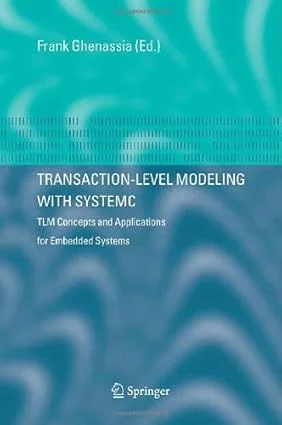

Research White Paper Proposal
Model-Based Embedded System Design Using UVM, SystemC, MATLAB/Simulink, RTOS, Embedded Linux, ARM SoCs, KVM, and QEMU
A Unified Virtual Platform Approach for Modern Embedded Product Development
How KeenComputer.com and IAS-Research.com Can Accelerate Embedded Systems Engineering
Abstract
Modern embedded systems have become significantly more complex due to the convergence of artificial intelligence, Industrial IoT (IIoT), automotive electronics, robotics, aerospace, medical devices, telecommunications, and edge computing. Traditional hardware-first development approaches are increasingly unable to meet aggressive development schedules, rising software complexity, and demanding verification requirements.
This paper presents a complete embedded system design methodology that integrates:
- MATLAB/Simulink
- Model-Based Design (MBD)
- SystemC and Transaction Level Modeling (TLM)
- Universal Verification Methodology (UVM)
- ARM Cortex-M and Cortex-A SoCs
- Real-Time Operating Systems (RTOS)
- Embedded Linux
- QEMU Virtual Platforms
- KVM Hardware Virtualization
- Continuous Integration (CI/CD)
- DevOps for Embedded Systems
The paper demonstrates how virtual prototyping enables software development months before physical hardware availability while significantly reducing development cost, improving verification coverage, and shortening product time-to-market.
Table of Contents
- Introduction
- Industry Challenges
- Embedded System Development Lifecycle
- Model-Based Design using MATLAB
- SystemC and TLM Virtual Platforms
- UVM Verification
- ARM SoC Architecture
- RTOS Integration
- Embedded Linux Development
- QEMU Virtual Platforms
- KVM Hardware Virtualization
- Hybrid Simulation
- CI/CD for Embedded Development
- Automotive Case Study
- Industrial IoT Case Study
- Medical Device Case Study
- AI Edge Computing
- Role of KeenComputer.com
- Role of IAS-Research.com
- Conclusions
1. Introduction
Today's embedded products include:
- Autonomous Vehicles
- Medical Imaging Systems
- Industrial Automation
- Smart Grid Controllers
- Robotics
- Edge AI Devices
- UAV Flight Controllers
- Automotive ECUs
- Consumer Electronics
- Telecom Equipment
These systems integrate:
- Multiple ARM processors
- DSP cores
- GPUs
- NPUs
- FPGA accelerators
- RTOS
- Linux
- Cloud connectivity
- AI inference engines
Software often exceeds several million lines of code, making verification the dominant cost in development.
2. Traditional Embedded Development Problems
Hardware often arrives late.
Software teams wait months.
Drivers cannot be developed.
Bootloaders cannot be tested.
Verification begins too late.
Typical issues include:
- Hardware re-spins
- Driver bugs
- Timing issues
- Interrupt failures
- DMA bugs
- Memory corruption
- Cache coherency problems
- Multicore synchronization issues
The cost of fixing bugs increases dramatically after silicon fabrication.
3. Modern Embedded Design Flow
Requirements ↓ MATLAB Models ↓ Simulink ↓ Automatic Code Generation ↓ SystemC Virtual Platform ↓ QEMU ARM Machine ↓ RTOS ↓ Embedded Linux ↓ UVM Verification ↓ FPGA Prototype ↓ ARM Silicon ↓ Manufacturing
4. MATLAB Model-Based Design
MATLAB enables engineers to validate algorithms before implementation.
Typical domains include:
- Motor control
- Digital signal processing
- Radar
- Control systems
- Battery management
- Power electronics
- Robotics
- Autonomous navigation
Simulink provides executable specifications that can generate optimized C/C++ code.
Benefits include:
- Reduced coding errors
- Early algorithm validation
- Automatic test generation
- Hardware-in-the-loop readiness
5. SystemC Virtual Platforms
SystemC provides a high-level executable representation of the hardware platform.
Typical components include:
- ARM CPU models
- Memory controllers
- DMA engines
- UART
- SPI
- I2C
- CAN
- Ethernet
- PCIe
- USB
Using Transaction-Level Modeling (TLM), engineers simulate system behavior much faster than RTL simulation.
Advantages:
- Rapid architecture exploration
- Early firmware development
- Performance estimation
- Software/hardware co-design
6. Universal Verification Methodology (UVM)
UVM remains the industry standard for functional verification of digital hardware.
A UVM environment typically includes:
- Sequencers
- Drivers
- Monitors
- Scoreboards
- Functional coverage
- Assertions
- Constrained-random stimulus
Benefits:
- Reusable verification IP (VIP)
- Automated regression testing
- High functional coverage
- Early bug detection
- Improved silicon quality
SystemC virtual platforms can be connected with UVM environments to validate both software and hardware interactions before RTL freeze.
7. ARM SoC Architecture
Typical heterogeneous ARM platforms include:
- Cortex-A53/A55/A72/A78 application cores
- Cortex-R real-time processors
- Cortex-M microcontrollers
- Mali GPUs
- NPUs for AI acceleration
- DDR controllers
- Secure boot
- TrustZone
- Ethernet MAC
- CAN FD
- USB
- PCIe
- SDIO
Development targets include NXP i.MX, ST STM32MP, TI Sitara, Renesas RZ, Xilinx Zynq, and similar ARM-based SoCs.
8. RTOS Integration
Typical RTOS platforms:
- FreeRTOS
- Zephyr
- ThreadX
- Azure RTOS
- RTEMS
- VxWorks
- QNX
- SafeRTOS
RTOS capabilities include:
- Deterministic scheduling
- Priority inheritance
- Interrupt handling
- Synchronization primitives
- Low-latency task switching
- Watchdog management
- Real-time networking
9. Embedded Linux
Linux provides advanced capabilities including:
- Networking
- Filesystems
- Containers
- Security
- Device management
- Multimedia
- AI frameworks
- Cloud connectivity
Common embedded Linux build systems:
- Yocto Project
- Buildroot
Kernel components include:
- Device Tree
- Kernel drivers
- Modules
- PREEMPT_RT patches
- eBPF
- Cgroups
- Namespaces
10. QEMU Virtual Platforms
QEMU enables full-system emulation of ARM platforms without physical hardware.
Typical use cases:
- Bootloader development (U-Boot)
- Linux kernel bring-up
- Device driver development
- RTOS testing
- CI/CD automation
- Regression testing
- Classroom and training environments
Advantages:
- No dependence on prototype hardware
- Repeatable test environments
- Fast debugging with GDB
- Snapshot and restore support
- Integration with automated pipelines
QEMU can emulate ARM Cortex-A systems, peripherals, storage, networking, and serial interfaces, allowing software teams to begin development months before silicon is available.
11. KVM Hardware Virtualization
Kernel-based Virtual Machine (KVM) leverages hardware virtualization extensions available on modern processors (including ARM and x86) to accelerate virtual machines.
Benefits include:
- Near-native execution speed
- Running multiple guest operating systems concurrently
- Isolation of development and test environments
- Efficient use of multicore servers
- Support for virtual networking and storage
For embedded development, KVM can host multiple virtual targets, enabling large-scale automated regression testing and parallel software validation.
12. Hybrid QEMU + KVM Development
A hybrid approach combines QEMU's device emulation with KVM acceleration where supported.
Example workflow:
- Develop firmware on a virtual ARM platform.
- Boot U-Boot and Embedded Linux in QEMU.
- Use KVM acceleration for performance on compatible hosts.
- Attach virtual peripherals and storage.
- Run automated test suites.
- Capture logs and coverage reports.
- Deploy validated software to physical ARM hardware.
This approach reduces iteration time while maintaining high fidelity for software testing.
13. Continuous Integration for Embedded Systems
A modern embedded DevOps pipeline may include:
- Git
- GitLab CI or Jenkins
- Docker containers
- Cross-compilation toolchains
- Static analysis
- Unit testing
- QEMU-based regression testing
- Hardware-in-the-loop (HIL) testing
- Artifact management
- Automated deployment
Integrating virtual platforms into CI/CD enables every code commit to be compiled, tested, and validated automatically before hardware deployment.
14. Industry Applications
This methodology is applicable across multiple sectors:
- Automotive: ADAS, ECUs, battery management systems, infotainment, AUTOSAR platforms.
- Industrial Automation: PLCs, robotics, predictive maintenance, edge gateways.
- Medical Devices: Patient monitors, infusion pumps, diagnostic imaging systems.
- Aerospace and Defense: Flight controllers, mission computers, avionics.
- Energy: Smart meters, grid controllers, renewable energy inverters.
- Telecommunications: 5G edge nodes, network appliances, software-defined networking.
15. How KeenComputer.com Can Help
KeenComputer.com can support organizations by providing:
- Embedded Linux integration and customization
- ARM SoC software development
- RTOS application development
- QEMU/KVM virtualization environments
- CI/CD implementation for embedded software
- DevOps automation
- Edge AI deployment
- Secure software update frameworks
- Technical documentation and training
- Digital transformation consulting for engineering teams
16. How IAS-Research.com Can Help
IAS-Research.com can provide advanced engineering and research services including:
- System architecture and feasibility studies
- MATLAB/Simulink model development
- SystemC/TLM virtual platform creation
- UVM verification strategy and testbench development
- Embedded AI algorithm integration
- Performance modeling and optimization
- Safety-critical software processes (IEC 61508, ISO 26262, DO-178C support)
- Research collaboration and publication support
- Technology roadmaps for next-generation embedded platforms
Conclusion
A unified development process that combines MATLAB/Simulink, SystemC/TLM, UVM, RTOS, Embedded Linux, ARM SoCs, QEMU, and KVM enables engineering teams to develop and validate complex embedded systems earlier, with greater confidence and lower cost. By embracing virtual platforms, automated verification, and DevOps practices, organizations can reduce project risk, improve software quality, and accelerate product delivery.
For organizations pursuing digital transformation in embedded and cyber-physical systems, KeenComputer.com and IAS-Research.com can provide end-to-end consulting, architecture, implementation, verification, and training services that bridge research with production-ready engineering solutions.